
How Google Crawls and Indexes Websites (Beginner Guide 2026)
Core Concepts: Crawling vs Indexing Defined
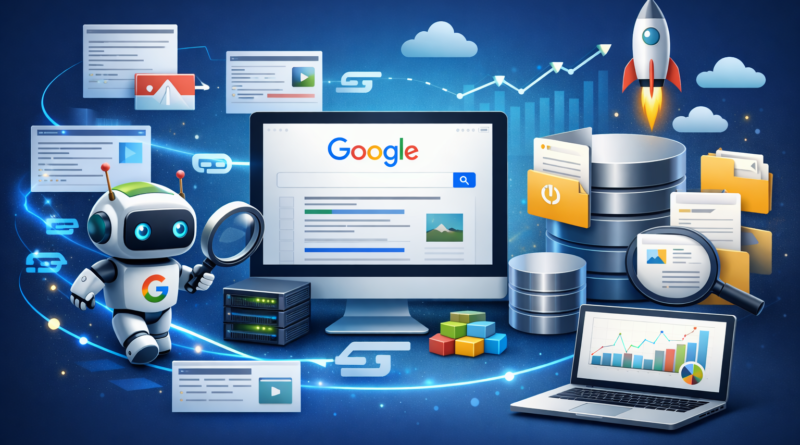
Google crawling and indexing represent distinct yet interconnected phases in how the search engine processes the web’s estimated 1.8 billion+ active sites. Crawling is the exploration stage where automated software discovers and fetches web pages, much like a librarian scanning shelves for new books. Indexing follows as the cataloging stage, where Google analyzes fetched content and decides if it’s worthy of storage in its massive Google Index database for quick retrieval during user searches.
Crawling Deep Dive: Google deploys Googlebot, its flagship web crawler, available in desktop and smartphone versions to mimic real-user browsing. The Googlebot Smartphone variant dominates since Google’s mobile-first indexing policy prioritizes mobile page versions for ranking decisions. Googlebot strictly adheres to directives in robots.txt files and limits processing to the first 15MB of uncompressed HTML or text per resource, ensuring efficiency across trillions of pages.
Indexing Deep Dive: After crawling, sophisticated machine learning algorithms—upgraded in 2026 with advanced natural language processing for nuanced entity recognition and user intent matching—evaluate content quality. Pages demonstrating value through uniqueness, depth, and alignment with E-E-A-T principles (Experience, Expertise, Authoritativeness, Trustworthiness) earn a spot in the Google Index. Non-qualifying pages face exclusion, explaining why some high-effort content never surfaces in searches. Simply put: No crawl equals no index; no index equals zero ranking potential.
Why Mastering Crawling and Indexing is Crucial for SEO Success
Over 90% of online journeys begin with Google Search, making crawling and indexing the gatekeepers to massive organic traffic, AdSense revenue, and brand authority building. Technical barriers like crawl blocks or indexing failures can render even viral-worthy content invisible, a common pitfall for new WordPress blogs in competitive niches such as Andhra cuisine recipes, gadget reviews, stock investing guides, or legal advice portals.
Direct business impacts span:
- Explosive organic traffic growth from long-tail keywords
- Sustained keyword rankings and niche topical authority
- Seamless AdSense approval and higher RPMs with clean technicals
- Core Web Vitals compliance boosting user signals and rankings
- Fortified resilience against Google’s frequent 2025-2026 core algorithm updates
For multi-site managers handling Way2News, Hot Cafe, or Top Stocks Guide, integrating tools like Rank Math SEO plugin and Google Search Console (GSC) becomes non-negotiable for real-time monitoring. For tailored WordPress tweaks, check this comprehensive Technical SEO for WordPress 2026 guide.
Complete Step-by-Step: How Google Discovers, Crawls, and Indexes
Google’s workflow for crawling and indexing evolves dynamically, with 2026 enhancements leveraging AI to accelerate JavaScript rendering and dynamic content processing. Below is an exhaustive breakdown of all six core stages, complete with examples relevant to bloggers.
Stage 1: Discovery of New Content
Fresh URLs surface through inbound links from already-indexed pages, properly submitted XML sitemaps, or direct URL Inspection requests in GSC. Amplifiers like social media shares on platforms such as X (formerly Twitter), LinkedIn, or Facebook expedite discovery, as Google aggressively crawls high-traffic social hubs. Premium signals include backlinks from authoritative .edu, .gov, or niche-relevant domains, prioritizing your pages in crawl queues.
Stage 2: Crawl Budget Allocation and Scheduling
Not all sites get equal attention; Google allocates a finite “crawl budget” influenced by site scale, content freshness, server reliability, and internal authority metrics akin to PageRank. Massive sites exceeding 10,000 pages must vigilantly prune low-value URLs like tag archives or duplicate parameters to avoid budget depletion. 2026 AI refinements smartly distribute budgets for modern progressive web apps (PWAs) and frameworks like Next.js or React.
Stage 3: Googlebot Fetching and Initial Download
Upon scheduling, Googlebot dispatches HTTP requests, honoring robots.txt rules and page-level meta robots tags. It prioritizes downloading core HTML (capped at 15MB uncompressed), followed by parallel fetches for linked CSS, JavaScript files, images, and embedded media. Critical here: Server-side performance—pages exceeding Core Web Vitals thresholds (e.g., LCP >2.5s) signal inefficiency, throttling future crawls.
Stage 4: Everflow Rendering Engine Processing
Googlebot’s Everflow engine emulates a recent Chrome browser to execute JavaScript, revealing dynamically loaded content invisible in raw HTML. Mobile rendering takes precedence under mobile-first indexing, with desktop as a supplement. Pitfalls abound for single-page applications (SPAs) featuring infinite scrolls, lazy loading without fallbacks, or client-side-only rendering—opt for hybrid server-side rendering (SSR) to shine.
Stage 5: Semantic Analysis and Indexing Verdict
Crawled and rendered pages undergo deep analysis: Algorithms dissect semantics, named entities, topical relevance, and holistic quality using multimodal ML models. Deciding factors include content originality, E-E-A-T alignment, mobile responsiveness, structured data richness, and absence of manipulative patterns. Successful candidates land in GSC’s “Pages” report under “Valid”; rejects populate “Excluded,” “Discovered – currently not indexed,” or error categories.
Stage 6: Integration into Search Serving Pipeline
Once indexed, content enters the ranking arena, evaluated per-query against hundreds of signals like relevance, freshness, backlink profile, and behavioral metrics. 2026 introduces heavier weighting for AI-generated overviews (e.g., Google AI Snippets) and zero-click SERP features, rewarding comprehensively indexed sites.
Practical Example for Bloggers: Publishing a detailed “Andhra Biryani Recipe” on HotCafe.blog, you update the XML sitemap and request indexing via GSC. Googlebot crawls within hours, renders mobile view flawlessly, indexes due to unique steps/photos/schema, and propels it to page 1 for “authentic Andhra biryani recipe 2026” amid recipe niche competition.
Proven Benefits of Crawl/Index Optimization
Investing in this foundation yields compounding returns:
- Lightning-fast indexing—mere hours for priority URLs via GSC tools
- Superior rankings with pristine index coverage ratios (target 80-95% valid pages)
- Accelerated topical authority via interconnected content clusters
- Traffic spikes surviving Google’s March 2025 and November 2025 core updates
- Effortless AdSense compliance, dodging manual actions from technical sins
- Enhanced visibility in emerging AI search interfaces like Perplexity or ChatGPT plugins
A well-crawled site telegraphs niche mastery to Google. Build deeper clusters with insights from Topical Authority for SEO 2026.
Risks, Limitations, and Avoidable Pitfalls
Powerful as it is, the system harbors traps:
- Crawl Budget Exhaustion: Bloated inventories from /?utm= params, faceted filters, or near-duplicates starve high-value pages
- JavaScript Rendering Bottlenecks: Unprepped SPAs lag weeks behind static peers
- Resource Constraints: HTML >15MB truncates; oversized images/CSS compound issues
- Quality-Based Deindexing: Thin/automated content auto-excluded post-Helpful Content Update evolutions
- Directive Misconfigurations: Overzealous robots.txt or stray noindex tags orphan entire sections
2026 Hot Risks: Differentiate search crawlers from AI trainers (e.g., allow Googlebot, disallow GPTBot). Leverage GSC Index Coverage religiously for proactive fixes.
Counter with arsenal from Best SEO Tools for Bloggers 2026.
Actionable Best Practices for Maximum Crawlability (2026 Edition)
Deploy these proven tactics:
- Resubmit refined XML sitemaps weekly via GSC, prioritizing lastmod dates
- Craft precise robots.txt: Disallow /wp-admin/, /?*, allow /wp-content/uploads/
- Implement self-referential rel=”canonical” across variants/duplicates
- Achieve Core Web Vitals excellence (LCP <2.5s, FID <100ms, CLS <0.1)
- Adopt SSR/SSG for JS frameworks; preconnect critical resources
- Leverage GSC URL Inspection for live indexing requests (quota-respecting)
- Foster deep internal linking with silo architecture and hierarchical URLs
- Prioritize mobile-first responsive design sans viewport issues
- Embed rich schema (FAQ, HowTo, Recipe) for enhanced parsing
- Analyze server access logs for Googlebot patterns/errors
Pro Tip for Rank Math Users: Enable auto-sitemap generation, robots.txt editor, and 404 monitor for seamless WordPress integration.
Expert Monitoring and Troubleshooting Toolkit
GSC’s Index Coverage report dissects status: Aim 80%+ Valid, <10% Warnings, zero tolerated Errors, scrutinize Excluded. Cross-reference with server logs (grep Googlebot user-agents) and reverse DNS for authenticity.
Systematic Fixes:
- Crawl Anomalies: Resolve 404s, 5xx chains, infinite redirect loops
- Unintended Noindex: Audit meta tags, X-Robots-Tag headers
- Soft 404s/Thin Content: Consolidate/merge or 410 Gone low-ROI pages
- Labelling Issues: Fortify authorship, About pages for E-E-A-T
Remediate, validate in GSC Live Test, resubmit—reindex within days.
To better understand how crawling, indexing, and technical optimization work together, it is important to rely on trusted SEO resources. Implementing proven techniques from comprehensive guides can significantly improve how Google discovers and evaluates your website.
- Learn which platforms help monitor crawling errors, indexing status, and search performance in this detailed guide on best SEO tools for bloggers .
- Improve crawlability, site structure, and page performance by following modern technical SEO best practices for WordPress .
- Strengthen long-term rankings by building relevance and trust using topical authority strategies for SEO .
Google officially explains how crawling and indexing work through its own documentation. These trusted resources provide accurate, up-to-date guidance straight from Google and leading web standards organizations.
- Google’s official explanation of crawling and indexing: How Google Search Works – Google Developers
- Understand robots.txt rules that control search engine crawling: Robots.txt Specifications – Google
- Technical standards for HTML and web rendering explained by MDN: HTML Basics – MDN Web Docs
Top Myths Shattered for Clarity
- Myth 1: Content live = instant indexing. Reality: Discovery varies days/weeks; force via GSC/sitemaps.
- Myth 2: Backlinks essential for all indexing. Reality: Sitemaps/GSC bootstrap new/niche sites fine.
- Myth 3: Google Ads propel crawling. Reality: Purely organic mechanics.
- Myth 4: Quantity trumps quality in indexing. Reality: SpamBrain filters junk aggressively.
- Myth 5: Desktop rendering primary. Reality: Mobile-first enshrined since 2019.
Expanded FAQ: Quick Answers to Top Questions
How long does indexing take in 2026?
Priority GSC requests: hours; standard: 1-4 weeks factoring authority/crawlability.
Index without backlinks possible?
Absolutely—sitemaps, direct submits suffice initially.
Prime indexing blockers?
Noindex directives, robots blocks, canonical conflicts, subpar quality.
Crawling synonymous with ranking?
No—discovery/indexing precede competitive ranking.
Verify page indexing status?
GSC Coverage or “site:yourdomain.com/page” operator.
Does load speed influence crawling?
Critically—slow sites rationed via budget penalties.
Are images separately indexed?
Yes, via descriptive alt, schema, accessible paths.
Handling duplicate content?
Canonical signals dictate the preferred version.
JavaScript site crawlability?
Viable if renderable; SSR accelerates markedly.
Managing crawl budget on big sites?
Noindex thin pages, consolidate params, prune orphans.
Disclaimer: Purely educational; professional SEO audit advised for site-specific tweaks.