
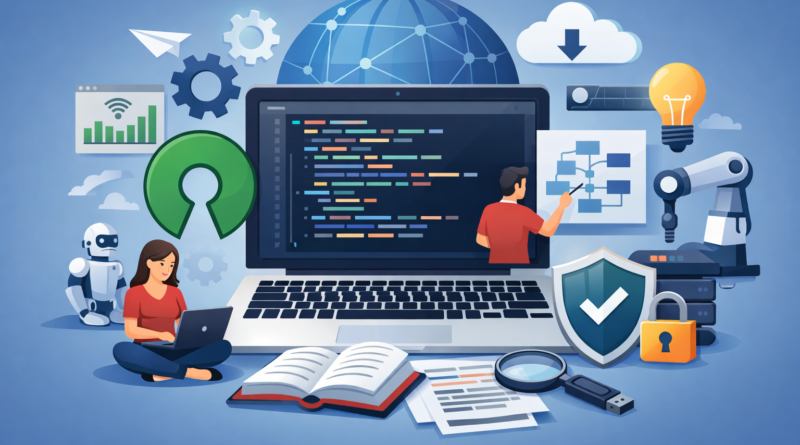
What Is Open-Source Software? Meaning, Benefits, Examples & Risks
What Is Open-Source Software?
Open-source software is software whose source code is freely available for anyone to view, modify, and distribute. If you are new to technology and wondering what is open-source software and why it matters, this guide will explain everything in simple terms.
In today’s digital world, open-source software powers websites, smartphones, cloud platforms, and even artificial intelligence tools. From beginners to professional developers, millions of people use open-source software daily without even realizing it. This article will help you understand its meaning, how it works, its advantages, risks, common myths, and real-life examples — all in beginner-friendly language.
Meaning and Explanation of Open-Source Software
Open-source software refers to computer software whose source code is openly shared with the public. Source code is the behind-the-scenes instructions that tell a program how to work. Unlike proprietary software, where the code is hidden and controlled by a company, open-source software allows anyone to see, study, improve, and share the code.
The idea behind open-source is transparency and collaboration. Instead of a single company controlling the software, a community of developers, organizations, and users contribute to making it better. This shared effort often leads to faster improvements, stronger security, and more flexibility.
Popular examples of open-source software include Linux (an operating system), WordPress (a website platform), Mozilla Firefox (a web browser), and LibreOffice (office productivity software). Many modern technologies, including cloud computing and artificial intelligence, rely heavily on open-source foundations.
Open-source does not always mean “free,” but in most cases, it is available at no cost. Even when paid services exist, the core software itself remains open and accessible.
Why Open-Source Software Matters
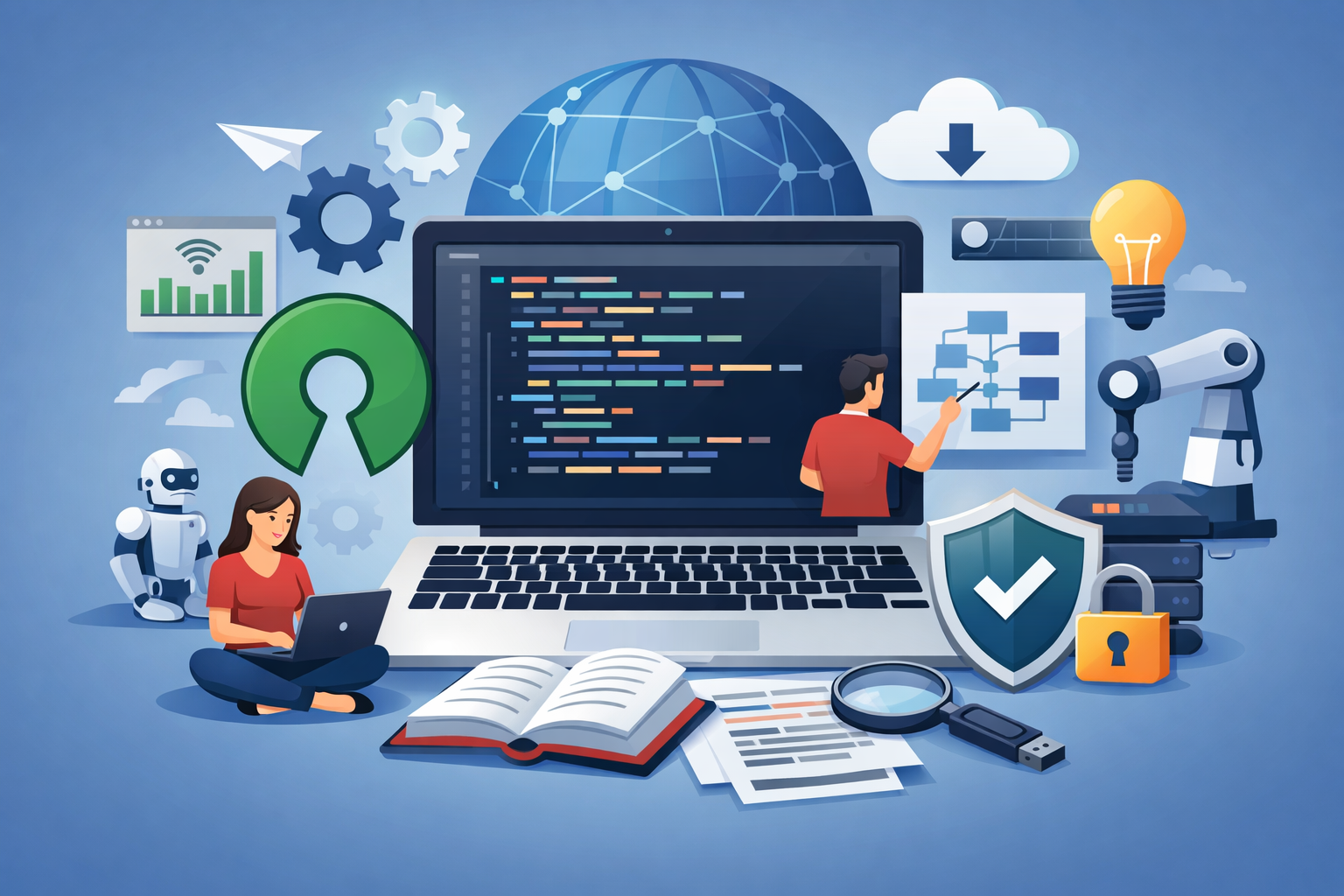
Open-source software matters because it promotes innovation, freedom, and accessibility. It removes barriers that prevent people from learning, experimenting, and building technology.
For individuals, open-source software provides free access to powerful tools without expensive licenses. Students, startups, and small businesses can use the same high-quality software as large corporations.
For developers, open-source creates opportunities to learn from real-world code, collaborate with global communities, and build professional credibility. Many developers start their careers by contributing to open-source projects.
From a business perspective, open-source software reduces dependency on a single vendor. Companies can customize software according to their needs instead of being locked into restrictive contracts.
Open-source also plays a major role in emerging technologies. Fields like artificial intelligence and cloud computing depend heavily on open collaboration. If you are interested in modern tech skills, you may also find it helpful to explore guides such as learning artificial intelligence from scratch.
How Open-Source Software Works (With Examples)
Open-source software works through a collaborative development model. The original creator releases the source code publicly, usually on platforms like GitHub or GitLab. Other developers can then review the code, suggest changes, fix bugs, or add new features.
These contributions are reviewed by maintainers — experienced developers who manage the project. Once approved, the changes become part of the official software.
For example, consider the Linux operating system. Thousands of developers from around the world contribute to Linux. Companies like Google, Amazon, and IBM also support its development because they rely on it for their own products.
Another example is WordPress, which powers millions of websites globally. Its open-source nature allows users to create custom themes, plugins, and features without restrictions.
Even everyday tools like Excel alternatives and productivity apps often have open-source versions. If you want to improve your productivity, learning Excel keyboard shortcuts can complement both open-source and proprietary tools.
Open-source projects often use licenses such as MIT, GPL, or Apache licenses. These licenses define how the software can be used, modified, and redistributed.
Benefits of Open-Source Software
Open-source software offers many advantages that make it attractive to individuals, businesses, and governments.
1. Cost-Effective
Most open-source software is free to use, which reduces software costs significantly. This is especially beneficial for startups, students, and non-profit organizations.
2. Transparency and Trust
Because the source code is public, anyone can inspect it for security issues or hidden risks. This transparency builds trust and allows faster identification of vulnerabilities.
3. Flexibility and Customization
Users can modify the software to suit their specific needs. This level of customization is rarely possible with closed-source software.
4. Community Support
Open-source communities provide extensive documentation, forums, and tutorials. Problems are often solved faster due to collective knowledge.
5. Better Performance and Innovation
Continuous improvements from global contributors often result in high-quality, optimized software. Many performance-enhancing tools, including system utilities, are open-source. For example, learning how to increase laptop speed often involves using open-source optimization tools.
Risks and Limitations of Open-Source Software
While open-source software has many benefits, it is not without challenges.
1. Lack of Official Support
Some open-source projects do not offer dedicated customer support. Users may need to rely on community forums or documentation.
2. Security Responsibility
Although open-source code is transparent, security depends on proper maintenance. If a project is poorly managed or abandoned, vulnerabilities may remain unpatched.
3. Compatibility Issues
Not all open-source software integrates smoothly with proprietary systems or enterprise environments.
4. Learning Curve
Some open-source tools require technical knowledge, which may be challenging for beginners.
Understanding how data is stored and managed is also important. If you are curious about digital storage safety, you may find this guide helpful: What is cloud storage and how safe is it?
Common Mistakes and Myths About Open-Source Software
Myth 1: Open-Source Software Is Not Secure
Many people believe open-source software is insecure because the code is public. In reality, transparency often leads to stronger security through community review.
Myth 2: Open-Source Means Low Quality
Some of the world’s most reliable systems run on open-source software, including servers, networks, and mobile devices.
Myth 3: Open-Source Is Only for Programmers
Many open-source tools are designed for everyday users, not just developers.
Common Mistake: Ignoring Licensing Rules
Although open-source is free, licenses must still be followed. Failing to understand licensing terms can lead to legal issues.
- Open Source Initiative – Official Open Source Definition
- Linux Foundation Open Source Guides
- MDN Web Docs – Open Source Explained
- IBM – What Is Open Source?
Frequently Asked Questions (FAQ)
1. What is open-source software in simple words?
It is software whose source code is freely available for anyone to view, modify, and share.
2. Is open-source software completely free?
Most open-source software is free, but some services or support may be paid.
3. Can open-source software be used for business?
Yes, many businesses use open-source software for websites, servers, and applications.
4. Is open-source software safe to use?
Yes, when maintained properly. Active projects are often very secure.
5. What is the difference between open-source and free software?
Free software focuses on user freedom, while open-source emphasizes collaborative development.
6. Do I need programming skills to use open-source software?
No, many open-source tools are user-friendly and require no coding knowledge.
7. Can open-source software be modified?
Yes, modification is one of its core principles.
Conclusion
Open-source software is a powerful foundation of modern technology. It encourages collaboration, innovation, and accessibility while giving users greater control over the tools they use.
From operating systems and websites to artificial intelligence and cloud platforms, open-source software plays a critical role in shaping the digital world. While it has certain limitations, its benefits often outweigh the risks when used responsibly.
Understanding open-source software is an important step for anyone interested in technology, whether you are a beginner, student, business owner, or developer.
Disclaimer
This article is published for informational and educational purposes only. The content is based on general knowledge and publicly available information at the time of writing. The author does not guarantee the accuracy, completeness, or suitability of the information for any specific purpose. Readers are advised to verify details independently and consult qualified professionals before making technical or business decisions.